
Website redesign for the business you run now.
Jardine Studio redesigns outdated business websites with clearer content, custom responsive design and a better path to inquiries. Keep the platform when it fits, rebuild when it does not, and plan the launch around the pages and systems you rely on.
Lambert: a real website redesign.
A catalogue-led manufacturing website became a product and specification system for architects and lighting designers. The studio reorganized the content, refined the identity and built the responsive site while retaining the familiar catalogue terminology.
- Strategy through launch
- 3–4 wk
- Production pages
- 13
- Legacy categories retained
- 14
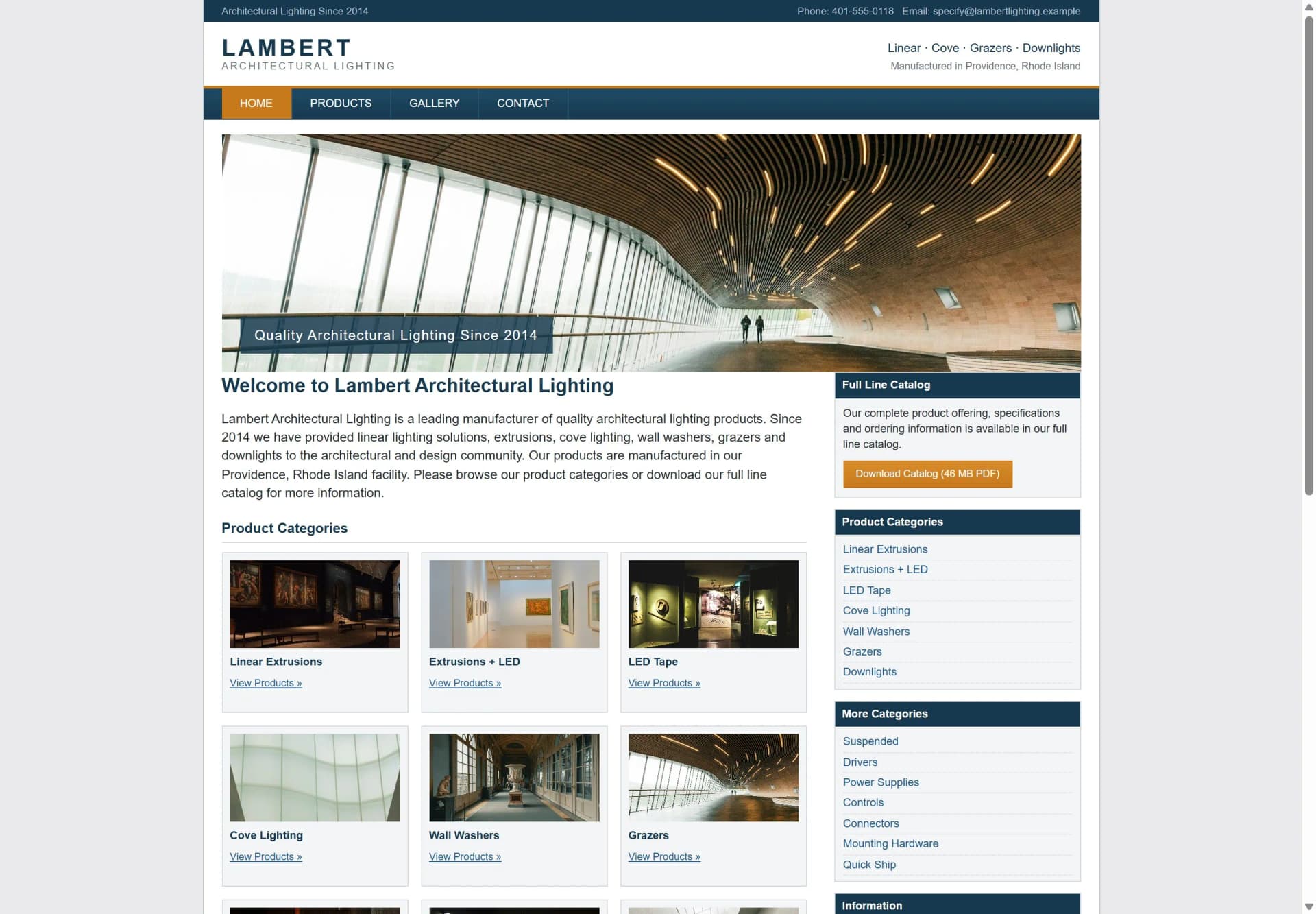
The site this replaced
Every Lambert product lived inside a 46 MB PDF, leaving architects without a useful web specification path and search engines without product pages to understand.

After the rebuild
Organised by what the specifier is lighting, with beam, colour, output, load and ingress on the page. Each product row leads directly to a prefilled request for its IES, LDT, Revit and cut-sheet package.
- Product family pages
- 5
- Product configurations
- 7
The rebuilt site is live client work at lambertlighting.com. The former site shown here is Jardine Studio’s reconstruction for comparison.
Implementation facts from this project. The case study records the remaining request-delivery handoff and the scope delivered.
Read the Lambert Architectural Lighting case studyChoose the amount of change the site needs.
An established small business may need a clearer website without replacing every page or changing platforms. The first review separates a focused repair, a same-platform redesign and a full website rebuild.
Repair a specific problem
The offer and structure still work, but a slow page, unclear service description or broken inquiry path needs attention. Fix the problem before commissioning a whole-site redesign.
Redesign on the current platform
The CMS and editing workflow still fit. Rework the content, navigation, responsive layouts and visual design while keeping a useful technical foundation.
Rebuild when the foundation is the limit
The platform cannot support the required editing, performance or integrations. Plan the content and URL changes alongside the new build, with a separate migration scope where needed.
What does a website redesign cost?
The price follows the pages, content and functionality that need to change. A focused refresh and a platform rebuild have different starting scopes; the written proposal confirms the work and total.
For 1–3 pages, the calculator starts at $1,500 for a same-platform redesign or $2,000 for a platform rebuild, before tax and feature additions.
Choose Redesign or Rebuild in the calculator, then adjust the pages and features.
Content and page structure
Page count, distinct layouts, product information and the amount of rewriting affect the work. Supplied-copy setup and a full content rewrite are scoped differently.
Systems and migration
Booking, commerce, CRM connections, custom motion and URL changes add their own implementation and testing. Third-party software, hosting and ongoing support are identified in the proposal.
What is included in the redesign?
The studio carries the agreed website scope from the current-site review through design, development and launch. Each stage leaves something you can review, rather than a finished site arriving as a surprise.
A page and content plan
A reviewed page list, clearer navigation and a purpose for each priority page. The brief identifies content to keep, revise or retire, plus the copy, images and approvals needed from your team.
Custom responsive website design
Typography, layouts, imagery and useful motion are designed for your business. Desktop and mobile previews show the service explanations, proof and next actions before the build is approved.
A working build and inquiry path
Approved pages, forms and agreed integrations are implemented and checked. A contact form, booking handoff or quote request is tested through to its destination, not judged by its appearance alone.
Open the related pageLaunch checks and editing handover
The agreed launch checks cover links, key URLs, mobile use, keyboard access, performance and measurement. Editing access, documentation and any remaining work are handed over with the site.
Plan the launch around what already matters.
A redesign can affect search visibility and the ways customers reach you. The studio reviews useful content, existing URLs and working systems before changing them, then checks the agreed paths at launch.
SEO migration and important URLs
Use the current page inventory and available Search Console data to decide what stays, changes or retires. Map changed URLs to relevant replacements, then check redirects, canonicals, titles, internal links and the sitemap. Rankings can fluctuate while search engines process the changes.
SEO migration and important URLsForms, booking and connected systems
List the destinations and account owners before the rebuild. Test successful submissions, validation and error states in the agreed environment, including receipt or handoff to the connected system.
Domain, launch and follow-up checks
Plan the hosting or DNS change with the account owner, keep a recovery route and confirm the production site can be crawled. Recheck priority pages, inquiries and measurement after launch. A redesign does not require a new domain.
Work directly with Alex, from brief to handover.
Alex Jardine handles the strategy, design and development. The studio is based in Toronto and works remotely across Canada and the United States. You review the decisions and working pages with the person making them.

Agree the scope
Share the current site, business priorities, budget and desired launch date. Together, confirm the pages, platform, content responsibilities, access and review milestones before the build starts.
Review working pages
Approve the structure and design direction, then review the implemented pages. Your team confirms service or product facts, supplies agreed assets and brings feedback together at each milestone.
Approve launch and handover
Review the launch checks, editing workflow and account access. The proposal separates delivery, follow-up checks and any ongoing care, so responsibility stays clear after the website goes live.
The launch standards behind the work.
Google’s site-move guidance informs the URL plan. Core Web Vitals provide loading, responsiveness and stability measures; a lab score alone is not evidence of every visitor’s experience.
- Google guidance for site moves with URL changes
The official baseline for redirects, monitoring, and URL changes during a rebuild.
- Core Web Vitals
Current definitions and measurement guidance for loading, responsiveness, and visual stability.
Questions about commissioning a website redesign.
Platform choice, content readiness and the handover shape the project as much as the design. These are the details to settle in the brief.
Do I have to change platforms?
Will a website redesign affect my SEO?
How long does a website redesign take?
Is all copywriting and new functionality included?
What happens after the redesigned site goes live?
Related services and reading.
Explore the wider website service, plan a search-sensitive move or work through an initial budget.
Show us the site you have outgrown.
Send the URL, what the website needs to do better and any pages or systems that must stay. Start with a conversation about the right scope.