
B&B.Specialty Contractors
Clear services.
A straightforward way to ask for an estimate.A custom website for a Greater Toronto Area contractor. Jardine designed and coded the site around the questions a homeowner needs answered before getting in touch.
- Designed & developed by
- Alex Jardine
- The work
- Website design, custom development & search setup
- The client
- B&B Specialty Contractors · Greater Toronto Area
Website-generated jobs
Reported by the owner · total
From a website visit
to a conversation about the work.
The owner reports that the website generated 17 jobs in total, including industrial glass work and local residential projects. The site gives prospective customers a place to understand the services and request an estimate.
Owner-reported total. Website attribution and job totals were not independently verified through analytics, contracts, project values, or revenue records.
Website design that makes the work easy to understand.
B&B covers several trades. The website groups that work into clear services, establishes the GTA service area and gives a ready customer one consistent next step: request a free estimate.
Three pages. Each with a job.
The homepage introduces the business and leads into the services. The services page explains what is included. The estimate page tells the customer how to get in touch and what happens next.
A visual identity suited to the work.
The B&B mark, deep blue backgrounds and red actions give the site a consistent identity. Large trade imagery introduces the work, while direct headings and readable service descriptions carry the detail.
The estimate stays within reach.
Navigation, service sections and closing actions lead to the same estimate page. On the client’s live site, the next step opens an email to B&B. The customer can describe the job before arranging a visit.
Six service groups, explained in plain language
Enough detail to help a customer recognize their project.
Drywall and paint, wallpaper, flooring, finish trim, windows and doors, and exterior landscaping and railing each have their own section. Included work and typical projects help customers assess fit before asking for a quote.
A single services page keeps those related trades together. Homepage links take visitors straight to the relevant section.
See the services page (opens in a new tab)Inspect the complete homepage
Explore the website
Browse the homepage, services and estimate route.
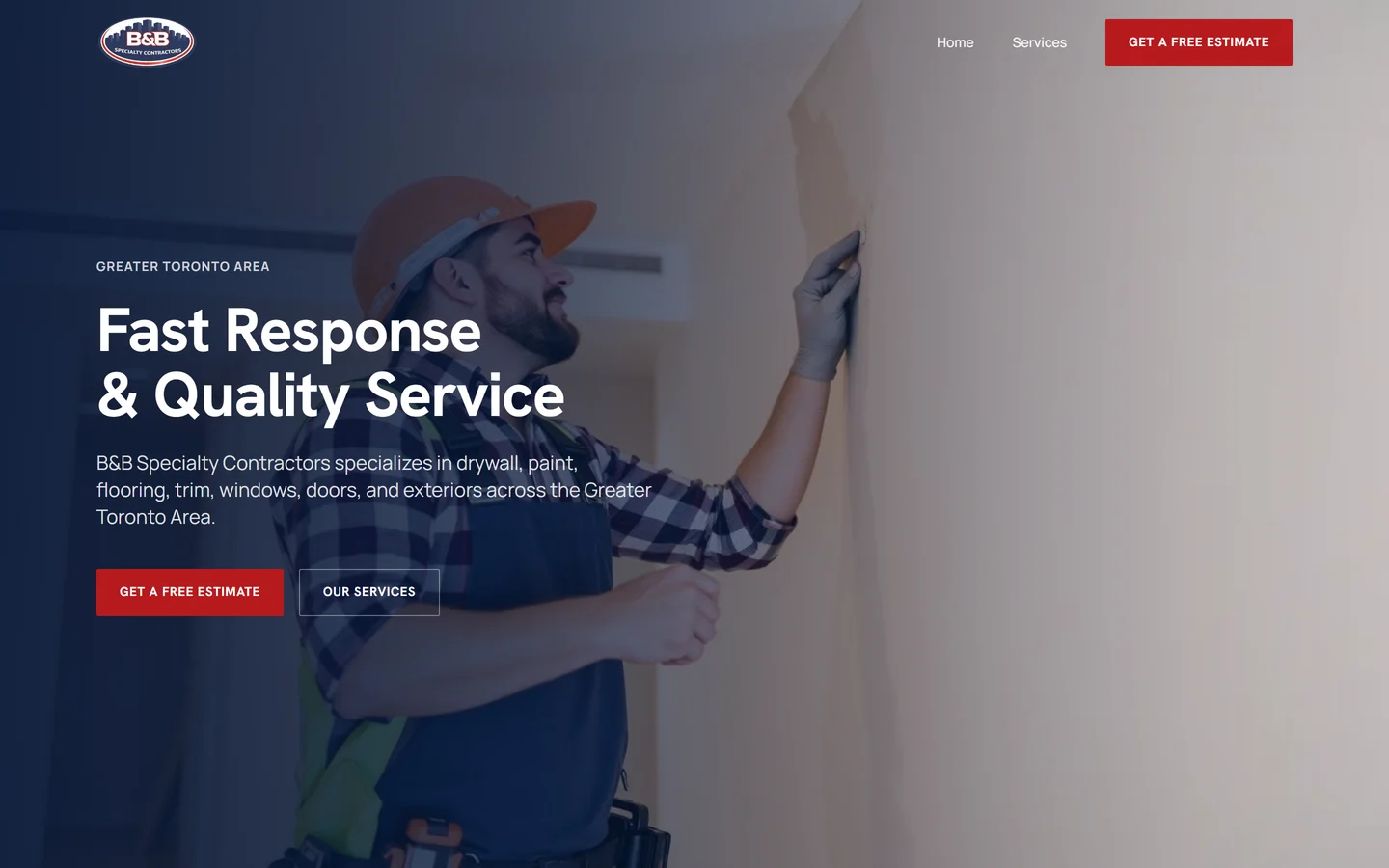
B&B Specialty Contractors
A new site for a Greater Toronto Area specialty contractor, built to turn local interest into estimate requests. The owner reports 17 website-generated jobs in total, including industrial glass and local residential work.
Custom development for the contractor website.
Jardine built the responsive pages, navigation, service sections and estimate experience in Next.js and TypeScript. Shared components keep the design consistent as customers move through the site.
One source for the services.
Service names, descriptions, images and included work are stored together. The homepage links and detailed service sections read from that content, so updates can stay consistent.
Built for smaller screens.
Layouts stack for phones, navigation becomes a mobile menu and images are served at suitable sizes. The service information and estimate route remain available without relying on animation.
Search setup from the start.
Each main page has its own title and description. The build includes a sitemap and structured business information describing the company and service area.
A closer look at the build
Page structure, images and the live contact route.
- Page framework
- Next.js App Router, React and TypeScript.
- Design implementation
- Tailwind styling, shared page headers, service rows, navigation and closing actions.
- Media
- Responsive images with defined dimensions and sizes for their position on the page.
- Client contact route
- The production estimate page uses email. An optional intake form exists in the codebase, but is not presented here as a feature active on the client’s site.
A focused example of Jardine’s website design and custom development for a local service business. The wider pattern is contractor website design.