
Specs stuck in a PDF
Buyers download a heavy catalogue to find one table, then email your team to confirm what the page could have shown them.
We design and build catalogue websites for small and midsize manufacturers. Buyers find the right product family, compare the specs on the page and ask for the exact file they need, with the product already filled in.
Most manufacturing sites were built around the print catalogue. Buyers can see that you make the product, but not whether it fits their project.
Buyers download a heavy catalogue to find one table, then email your team to confirm what the page could have shown them.
Product codes make sense inside the business. Buyers start with the job in front of them and need a way in from there.
A general contact form drops the product the buyer was looking at, so every reply starts with a question.
Lambert Architectural Lighting, a Rhode Island manufacturer, sells to architects, lighting designers and specifiers. We rebuilt their site so buyers choose a product family by what they're lighting, compare configurations on the page and request files with the product attached.
Each of the five product families now has its own page, with all seven configurations and their specs in a table beside the product. All fourteen category names Lambert's regular buyers knew carried over, so returning specifiers still find their way around.
Choosing the IES file for the LR-40 opens Lambert's request form with the product and file already written in. Strategy through launch took three to four weeks.

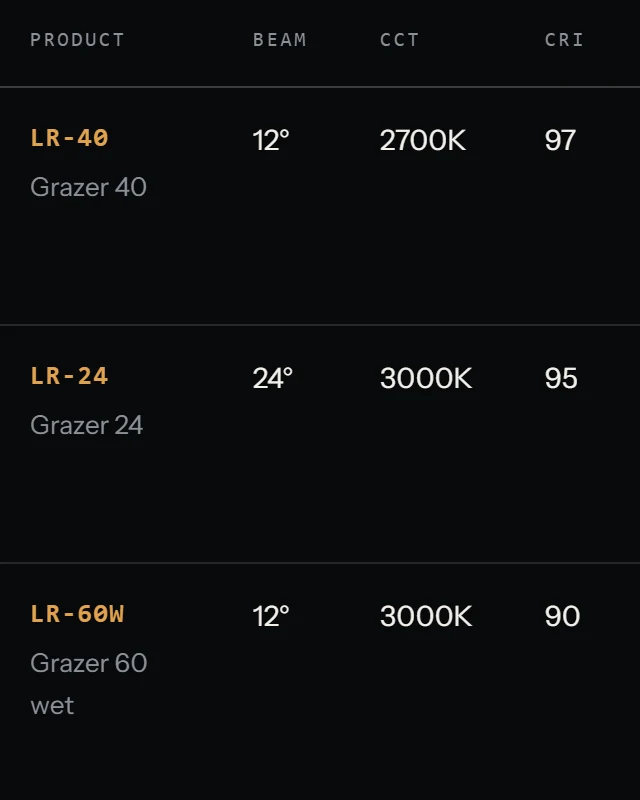
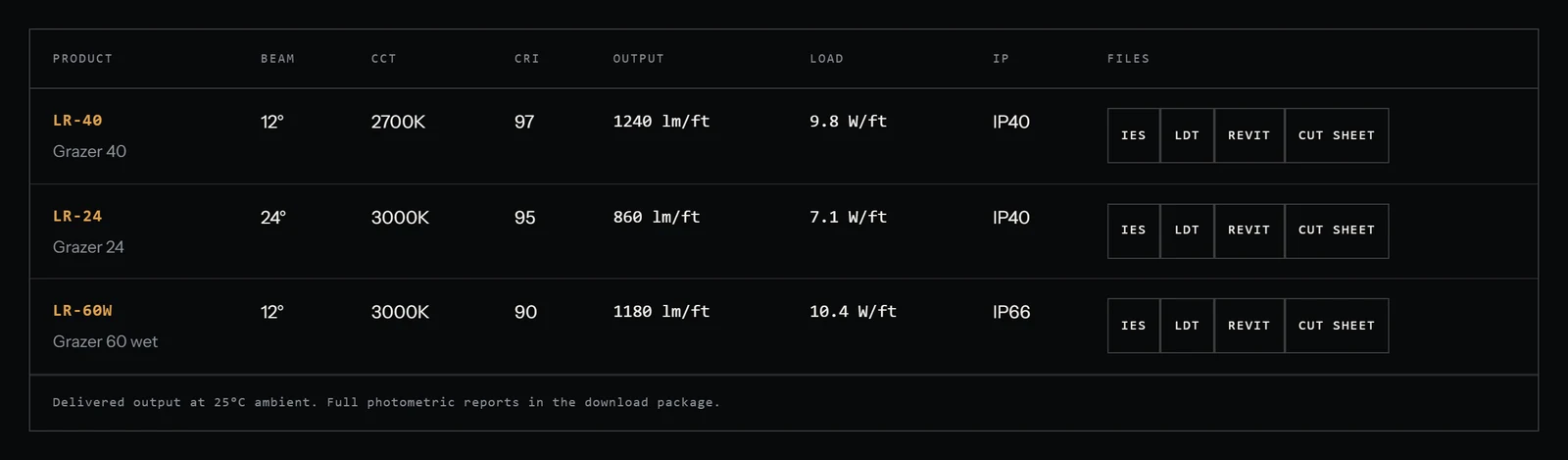
A good catalogue site takes a buyer from the problem they're solving to the exact product and file, without a phone call in between.
We organize the range around the jobs your buyers are doing, and keep the product names your regulars already search for.
Dimensions, options and ratings sit next to the product in tables that read well on a phone. Your PDFs stay available for anyone who wants them.
When a buyer requests a file or a quote, the product they were viewing comes with the message, so your team can answer straight away.

Alex works directly on the structure, design and build. Your team supplies and approves the technical details, and we turn them into pages that stay easy to keep up to date.
Price depends on how many products and templates you need and whether the site connects to other systems. The cost calculator gives you a planning range, and your written quote confirms the final price.
New structure, product templates and spec pages built from the product data you already have. Lambert is this kind of project.
Get a planning rangeFor a site that pulls from a product database, shows account pricing or sends requests into your CRM. We map the systems first, then quote the connection.
Talk it throughWe work best with established manufacturers in Canada and the US whose owner or small marketing team wants to work directly with the people designing and building the site.
You have an established product range, approved specs and a website that no longer does it justice.
You need a full online store with live inventory, or a large enterprise rollout with a long procurement process.
Quick answers on updates, documents, system connections and cost.
Send your current site and one product family. We'll look at how buyers move through it today and tell you how we'd approach the rebuild.
For established manufacturers in Canada and the US. Tell us about your range and what buyers ask your team most.
Start a project inquiryOur wider development work, including connections to product and sales systems.
Custom web developmentHow a redesign keeps the content and links that already work while everything else improves.
Website redesign